VoIP and Carrier Numbers: What a Number Establishes
A telephone number can belong to a multinational numbering plan, persist through a physical move, or be used in a documented service-lookup process. Those mechanisms do not make the number durable proof of present location.
Not legal advice. This page is research, not compliance guidance.
What distinctions apply to number mechanisms?
Federal numbering rules include interconnected VoIP providers within the service-provider definition, and RFC 6116 documents how E.164 numbers can be transformed into DNS names for service lookup; this page does not define or compare SIM-based, prepaid, or burner number classes.
Federal numbering rules include interconnected VoIP providers within the service-provider definition. The North American Numbering Plan covers the United States and its territories, Canada, and multiple Caribbean jurisdictions.
RFC 6116 documents a separate mechanism. Data associated with E.164 numbers can be stored in the Domain Name System. An E.164 number can be transformed into a DNS name, and DNS queries for NAPTR resource records can be used to look up services associated with that number.
This page does not define or compare SIM-based, prepaid, or burner number classes.
- Federal classification: the service-provider definition includes interconnected VoIP providers.
- Numbering mechanism: an E.164 number can be transformed into a DNS name for NAPTR service lookup.
- Page boundary: SIM-based, prepaid, and burner number classes are not defined or compared here.
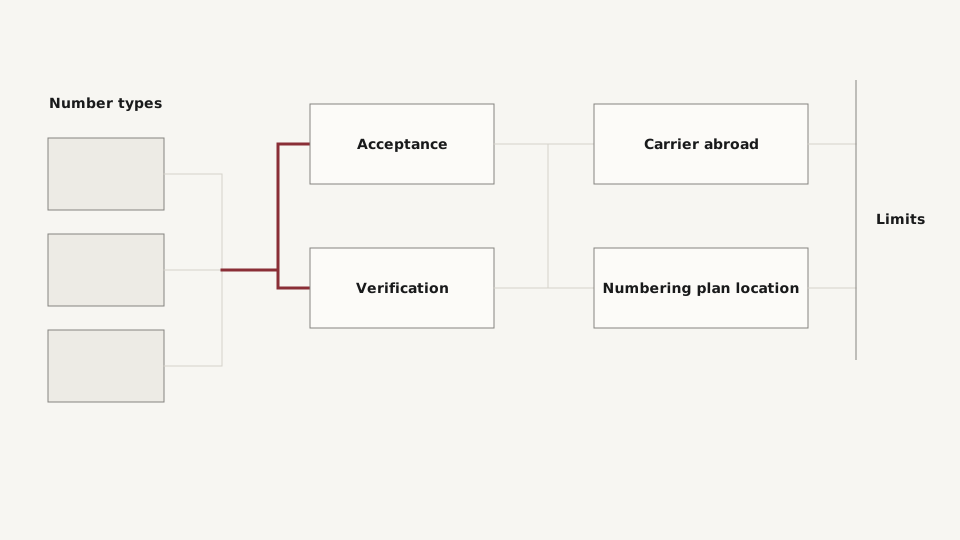
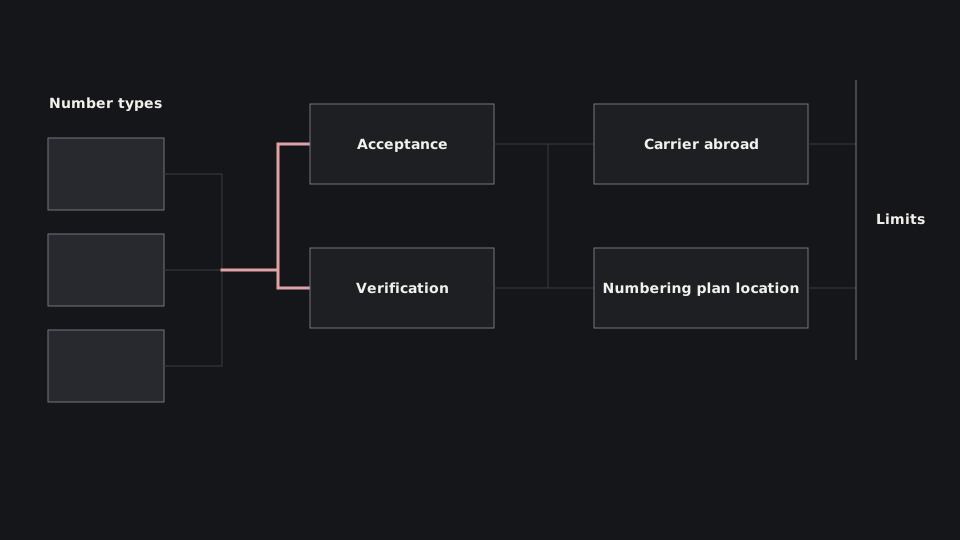
Figure 1. Number types branch into separate acceptance, verification, carrier-abroad and numbering-plan-location questions before the limits boundary.
Source: none (concept)
What should a verifier consider before PSTN authentication?
Before using the public switched telephone network to deliver an out-of-band authentication secret, a verifier SHOULD consider risk indicators such as a device swap, SIM change, number porting, or other abnormal behavior; this page states no general VoIP-number acceptance rule.
The guidance is a risk check, not an acceptance rule. A verifier SHOULD consider indicators that the number or device context may have changed before sending an authentication secret through the public switched telephone network. The listed indicators include a device swap, a SIM change, number porting, and other abnormal behavior.
The word SHOULD matters. This page retains the recommendation's strength and does not rewrite it as a universal requirement.
Whether a particular service accepts a VoIP number is a product-specific question outside this page's claim. No general accept-or-reject rule is stated here.
- Risk indicators named in the guidance: device swap, SIM change, number porting, or other abnormal behavior.
- Normative boundary: a verifier SHOULD consider those indicators before PSTN delivery of an out-of-band authentication secret.
- Page boundary: no general rule about services accepting or rejecting VoIP numbers is stated here.
What does a NANP number establish across jurisdictions?
The North American Numbering Plan spans the United States and its territories, Canada, and multiple Caribbean jurisdictions, while federal numbering rules include interconnected VoIP providers within the service-provider definition; country-specific carrier protections and SIM rules are outside this page's scope.
The numbering-plan boundary crosses national and territorial lines. The shared numbering-plan scope is the only cross-jurisdiction point made here.
Federal numbering rules include interconnected VoIP providers within the service-provider definition. Carrier protections, number handling, and registration requirements are outside that classification and are not compared here.
- Numbering-plan scope: the North American Numbering Plan covers the United States and its territories, Canada, and multiple Caribbean jurisdictions.
- Federal classification: the service-provider definition includes interconnected VoIP providers.
- Page boundary: carrier protections and country-specific SIM registration rules are not compared here.
Does a phone number establish present physical location?
No. Federal numbering rules define location portability as retaining an existing telephone number while moving from one physical location to another, and the North American Numbering Plan spans multiple countries and territories.
Location portability lets an existing telephone number remain in use after a move from one physical location to another. A number can therefore persist even when the physical location connected with its earlier use has changed.
Numbering-plan scope supplies a second boundary. The North American Numbering Plan covers the United States and its territories, Canada, and multiple Caribbean jurisdictions. A number within that plan does not, by plan membership alone, fix one present country, territory, or physical location.
The bounded conclusion is about the number, not its user: portability and multinational plan scope prevent the number alone from serving as durable proof of present physical location.
- Location portability: retain an existing telephone number while moving from one physical location to another.
- Plan scope: one numbering plan spans multiple countries and territories.
- Limit: the number alone does not establish present physical location.
What are the limits of a number as a location or verification signal?
A telephone number may persist after a physical move, and PSTN authentication remains subject to risk indicators that a verifier SHOULD consider; carrier-level location tracking of a registered SIM is outside the mechanisms described on this page.
A number is a bounded signal. Location portability means an existing telephone number can remain after a move from one physical location to another, so the number alone does not prove present physical location.
PSTN delivery is also bounded as a verification signal. Before using the public switched telephone network to deliver an out-of-band authentication secret, a verifier SHOULD consider indicators including a device swap, SIM change, number porting, or other abnormal behavior.
This page makes no claim about carrier-level location tracking of a registered SIM. Portability, numbering-plan scope, and PSTN verification guidance are not used here to infer such tracking.
For the separate topic of authentication architecture and factor location, see Passkeys and Second-Factor Location.
- Location limit: a portable number can persist after the associated physical location changes.
- Verification limit: a verifier SHOULD consider device and number-change risk indicators before PSTN authentication-secret delivery.
- Page boundary: no carrier-level location-tracking claim is made here.