Email Alias Forwarding and Private Inboxes
An email alias can stand between a correspondent and a private inbox, but the forwarding layer remains part of the message path. Visibility, message retention, tracker removal, recovery, rights, and portability are separate claims rather than one promise of privacy.
Not legal advice. This page is research, not compliance guidance.
What are the three email-alias data paths?
The core paths are inbound mail from a correspondent through an alias to a private inbox and outbound replies sent through the alias; a separate published example adds a buffer step that removes embedded tracking technologies before forwarding.
In the inbound path, a correspondent sends mail to the alias and the alias service forwards it to the private inbox. In the reply path, the inbox user sends through the alias so the alias is the address seen by the correspondent. The alias layer therefore sits between the two endpoints in both directions.
A published walkthrough documents a third, bounded variant. In that example, incoming mail reaches a buffer address, embedded tracking technologies are removed, and the resulting message is forwarded to the main inbox. The walkthrough also says temporary aliases in that flow can later be deleted.
Tracker removal is described for that documented example only. Forwarding and replying through an alias do not, by themselves, establish that a service removes trackers or offers deletable temporary aliases.
- Inbound: correspondent to alias to private inbox.
- Reply: private inbox through the alias, with the alias shown to the correspondent.
- Documented buffer variant: incoming mail has embedded tracking technologies removed before the message is forwarded; temporary aliases can later be deleted.

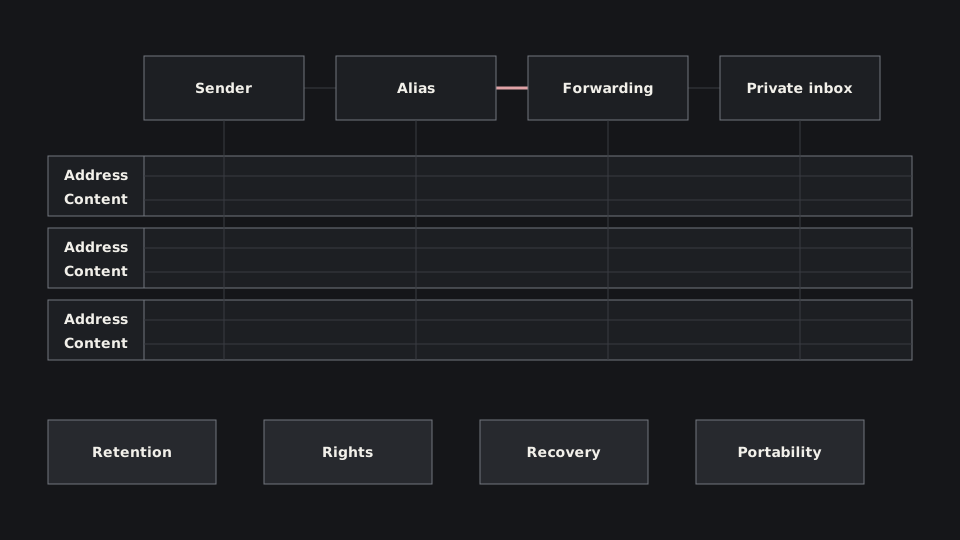
Figure 1. Alias, forwarding and private-inbox paths keep address, content, retention, rights, recovery and portability questions separate.
Source: none (concept)
Who sees the addresses, metadata, and content?
The correspondent sees the alias and mail reaches the private inbox, while one cited forwarding service says it can see sender and recipient addresses, originating IP, subject, timing, and specified account activity.
The alias is the email address presented to the correspondent in the documented forwarding and reply flow. Messages sent to that alias are forwarded to the private inbox, and replies can travel back through the alias.
The forwarding layer still has its own visibility. One cited service says it can see sender and recipient email addresses, the IP address from which an incoming message originated, the message subject, and sent and received times. Its listed account activity includes the number of messages sent, storage used, total messages, and last login time.
The same service says encrypted message content is unavailable to it. It also says unencrypted inbound messages from external providers are scanned for spam and viruses. These are statements about one service's data path and policy, not evidence that every alias provider observes, encrypts, or scans mail in the same way.
- Correspondent: sees the alias as the email address in the documented flow.
- Private inbox: receives messages forwarded from the alias.
- Cited forwarding service: says it can see sender and recipient addresses, originating IP, subject, timing, and specified account activity.
- Content boundary in that policy: encrypted content is unavailable to the service, while unencrypted inbound mail is scanned for spam and viruses.
- Scope limit: the cited policy does not establish how every forwarding service handles addresses, metadata, or content.
How do retention and data-subject rights differ?
One cited forwarding service says it deletes a delivered message from its server when the message reaches its destination and keeps an undeliverable message for seven days; that retention statement does not say which data-subject rights apply.
The retention statement is service-specific. The cited service says a message is deleted from its server as soon as it reaches the destination. It says a message that cannot be delivered is kept for seven days so the user can view it and decide what to do.
Delivery and non-delivery have different stated retention outcomes in this service's policy. That policy describes one service rather than email-alias providers as a whole.
Retention is not the same question as data-subject rights. A message-retention statement does not say which data-subject rights apply at the forwarding layer.
- Delivered message in the cited policy: deleted from the service's server when it reaches its destination.
- Undeliverable message in the cited policy: kept for seven days.
- Scope limit: one service's retention statement is not a universal provider rule.
- Rights: the cited retention statement does not say which data-subject rights apply at the forwarding layer.
How are recovery and portability handled?
The cited statements about forwarding, replies, alias deletion, and message retention do not describe a recovery mechanism or a portability option.
Forwarding, reply, alias deletion, and message retention are separate from recovering access or moving an alias configuration. The cited service statements do not describe either operation.
See the Email Alias Service Comparison for current provider-specific recovery, portability, and operational details. Related reading: Hardened Mobile Operating Systems: Isolation, Boot, and Updates and VoIP and Carrier Numbers: What a Number Establishes. For the relationship between alias domains and registrar records, see Alias Domains and Registrar Records: What the Evidence Proves.
- Recovery: none of the cited service statements describes a recovery mechanism.
- Portability: none of the cited service statements describes a transfer or migration option.
- Different operations: forwarding, retention, and temporary-alias deletion are not recovery or migration.
- Provider details: consult the linked comparison for current service-specific information.